(奇摩原貼:2008/12/16)
不少學術人士和財經網站 (ex: 綠角) 舉出很多實證來說明 [適時進出] 是不可行的; 另有一本發行了三十幾年的投資經典 - Burton G. Malkiel 寫的 漫步華爾街 (A Random Walk Down Wall Street), 裡面提出了一些觀點與看法, 值得大家思考與心證.
The attempt to predict accurately the future course of stock prices and thus the appropriate time to buy or sell a stock must rank as one of investors' most persistent endeavors. 設法精確地預測股價未來的走勢, 以便抓住適當的買賣點, 是投資人最持續不懈的努力.
1. Technical Analysis (Castle-in-the-Air Theory): 技術分析 (空中樓閣理論)
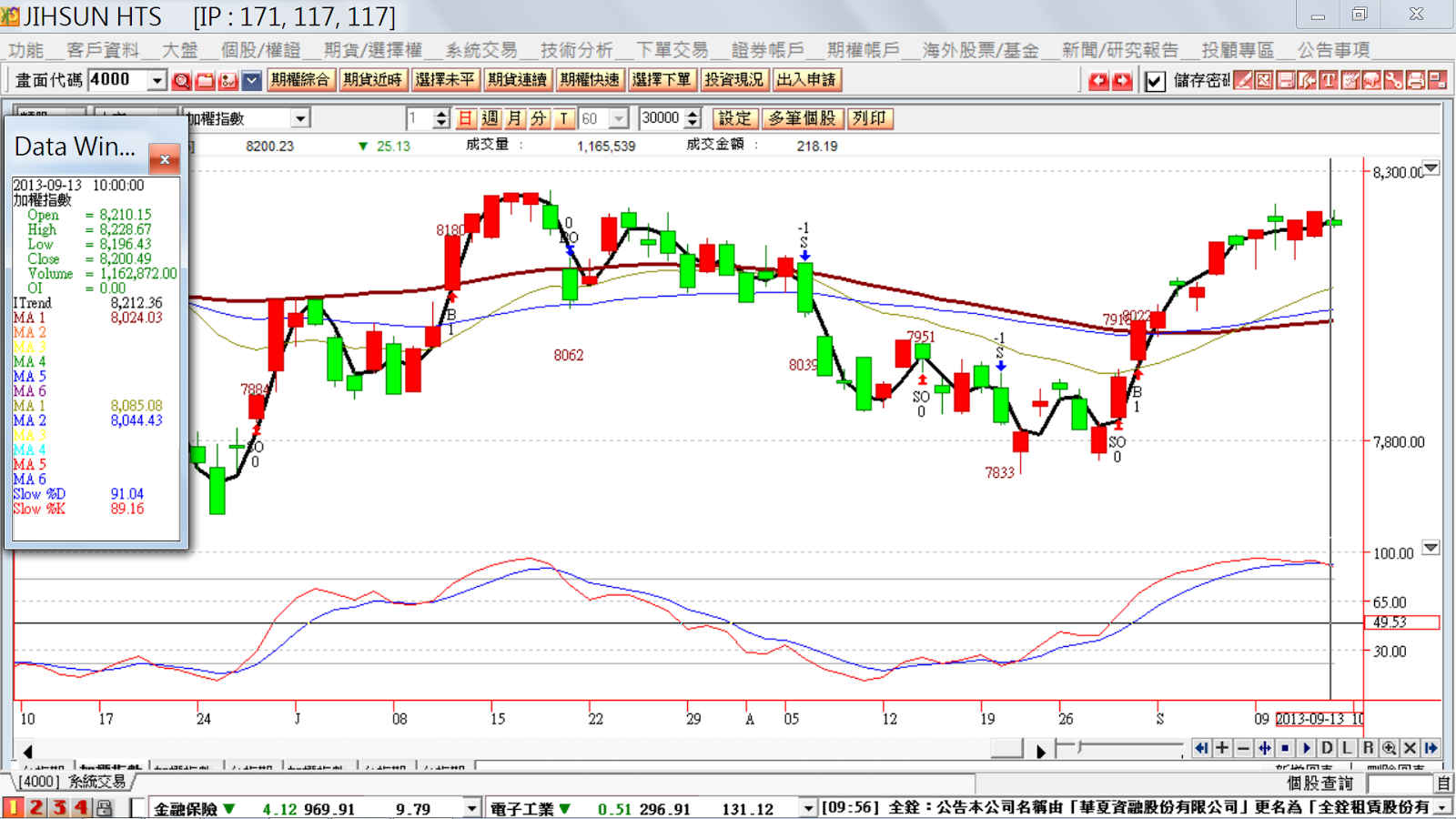
Technical analysis is essentially the making and interpreting of stock charts. They study the past—both the movements of common stock prices and the volume of trading—for a clue to the direction of future change. Most chartists believe that the market is only 10 percent logical and 90 percent psychological. 技術分析主要的工作是製作股價圖, 並加以解釋. 圖形專家研究過去股價和交易量的變動, 試圖找出未來變動的方向. 專家們相信, 市場被10%的理性, 加上90%的心理因素所影響
John Maynard Keynes, a famous economist and successful investor, enunciated the theory most lucidly in 1936. It was his opinion that professional investors prefer to devote their energies not to estimating intrinsic values, but rather to analyzing how the crowd of investors is likely to behave in the future and how during periods of optimism they tend to build their hopes into castles in the air. 著名經濟學家暨一流投資人凱因斯 (John Maynard Keynes)認為專業投資人不該把精力用於估算股票的真實價值, 而該用於分析投資大眾未來的動向, 以及在樂觀時期, 他們會如何把希望建築為空中樓閣.
Keynes described the playing of the stock market in terms readily understandable by his fellow Englishmen: It is analogous to entering a newspaper beauty-judging contest in which one must select the six prettiest faces out of a hundred photographs, with the prize going to the person whose selections most nearly conform to those of the group as a whole. 股票遊戲好比當報紙選美的評審一樣, 你必須由上百張照片中挑出六張最漂亮的面孔, 選出的結果最接近全體評審的, 就是贏家.
The smart player recognizes that personal criteria of beauty are irrelevant in determining the contest winner. A better strategy is to select those faces the other players are likely to fancy. 聰明的玩家都知道, 個人的審美偏好在比賽中無關緊要, 聰明的做法就是去捨去自己的意見, 反而去挑選其他人會選的
The first principle of technical analysis is that all information about earnings, dividends, and the future performance of a company is automatically reflected in the company's past market prices. The second principle is that prices tend to move in trends. 技術分析的第一個原則是, 一家公司所有關於盈餘.股利.未來表現的資訊, 都已經自動反映在過去的市場股價上了. 第二個原則是, 價格循著趨勢而變動, 漲者續漲, 跌者續跌, 不動者續不動.
The technician is interested only in the record of the stock's price. 技術分析者只對股價的歷史記錄有興趣
If the weak form of the random-walk hypothesis is a valid description of the stock market, then, as my colleague Richard Quandt says, "Technical analysis is akin to astrology and every bit as scientific." 如果弱式隨機漫步理論成立, 就像我同事Richard Quandt說的: 技術分析是和占星術同類的科學.
Any regularity in the stock market that can be discovered and acted upon profitably is bound to destroy itself. This is the fundamental reason why I am convinced that no one will be successful in using technical methods to get above-average returns in the stock market. 任何可據以獲利的規則, 最後都會自我毀滅而失敗 (大眾的集體行為反而會讓它不準); 這就是我認為沒有人能依賴技術分析持續獲得高於平均報酬的原因
2. Fundamental Analysis (Firm-Foundation Theory): 基本分析 (磐石理論)
Fundamentalists seek to determine an issue's proper value. Value in this case is related to growth, dividend payout, interest rates, and risk, according to the rules of the firm-foundation theory outlined in the last chapter. By estimating such factors as growth for each company, the fundamentalist arrives at an estimate of a security's intrinsic value. Fundamental analysts take the opposite tack, believing the market to be 90 percent logical and only 10 percent psychological.基本分析專家尋找股票的適當價格, 而影響價格的相關因素為獲利和股利的預期成長率.利率以及風險等, 專家們藉由分析以上因素, 估算出股票的真實價值. 和技術專家相反地, 基本分析專家相信市場被90%的理性, 加上10%的心理因素所影響
The Fundamentalist's primary concern is with what a stock is really worth. 基本分析者主要關心的是股票的真正價值
In estimating the firm-foundation value of a security, the fundamentalist's most important job is to estimate the firm's future stream of earnings and dividends. To do this, he or she must estimate the firm's sales level, operating costs, corporate tax rates, depreciation policies, and the sources and costs of its capital requirements. 為了估計股票的真實價值, 基本分析師最重要的工作是估計公司未來盈餘和股利的流量. 必須估計公司的營業額.維運成本.稅率.折舊政策.以及公司資本的來源和其成本
There are three potential flaws in this type of analysis. First, the information and analysis may be incorrect. Second, the security analyst's estimate of "value" may be faulty. Third, the market may not correct its "mistake" and the stock price might not converge to its value estimate. 這類分析有三個瑕疵. 第一, 資訊和分析可能不正確. 第二, 證券分析師對價值的估計可能是錯的. 第三, 市場可能不會發生 [矯正錯誤] 的情形, 且股價可能一直不去反映其估計出的應有價值
Fundamental analysis is no better than technical analysis in enabling investors to capture above-average returns. 使投資人有能力抓住高於平均報酬的願望上, 基本分析並不比技術分析高明.
The Standard & Poor's 500-Stock Index, a composite that represents 75 percent of the value of all U.S.-traded common stocks, beats most of the experts over the long pull. Buying a portfolio of all companies in this index would be an easy way to own stocks. 標普500股價指數是代表75%美國股市成交值的股票指數, 它的長期績效打敗大多數的股市專家. 購買這個指數中所有的股票組合是一種簡易的持股方法
Index funds have regularly produced rates of return exceeding those of active managers by close to 2 percentage points. Even if stock markets were less than perfectly efficient, active management as a whole cannot achieve gross returns exceeding the market as a whole and therefore they must, on average, underperform the indexes by the amount of these expense and transactions costs disadvantages. 被動管理的指數型基金比起主動管理的共同基金, 在報酬率上經常好到接近2%. 即使股市並非完全有效率, 積極進出的基金所得的報酬, 仍無法勝過股市整體的平均報酬, 一般而言, 共同基金報酬低於股票指數的原因在於其管理費用和交易成本
Peter Lynch, just after he retired from managing the Magellan Fund, as well as the legendary Warren Buffet, admitted that most investors would be better off in an index fund rather than investing in an actively managed equity mutual fund. 彼得林區 以及傳奇人物 華倫巴菲特 都承認, 大多數的投資人購買指數型基金會比投資於積極管理的共同基金更為有利.